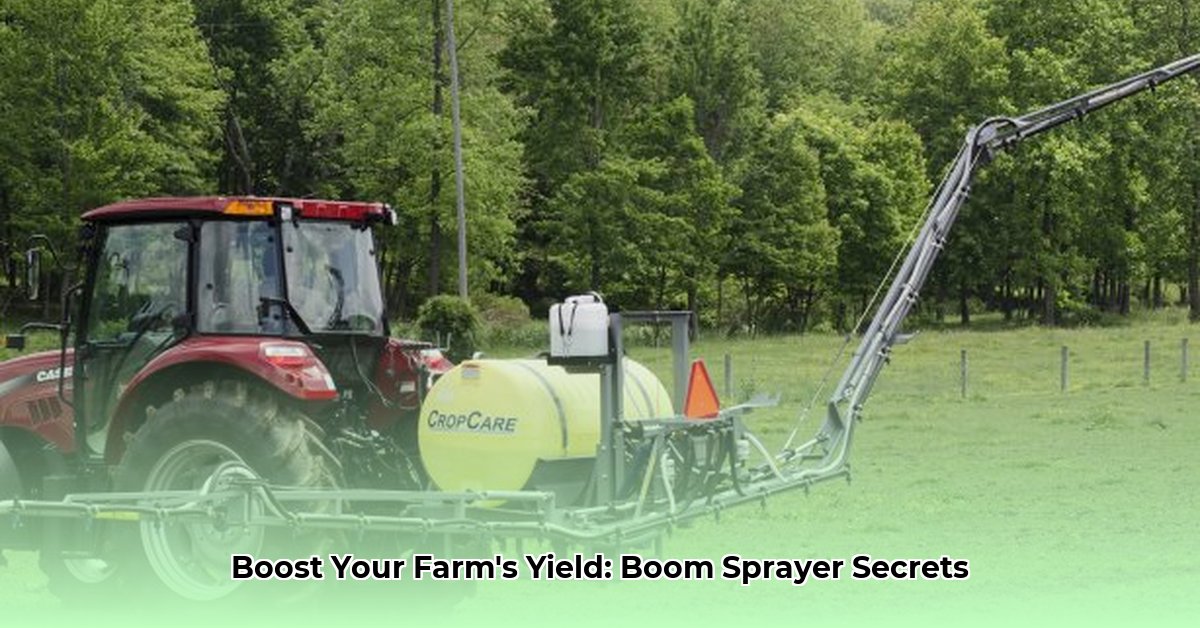
Understanding Boom Sprayers and Precision Spraying
Boom sprayers transform tractors into precision farming tools, enabling efficient and environmentally conscious crop management. They allow for targeted application of pesticides, herbicides, and fertilizers, minimizing waste and protecting the environment. This targeted approach results in less chemical runoff into waterways, promoting cleaner water and healthier ecosystems.
For more on tractor-related equipment, check out tractor trailers.
This guide will equip you with the knowledge to select, operate, and maintain a boom sprayer effectively, maximizing its benefits for your farm and the environment.
Why Precision Spraying is Essential for Sustainable Farming
Precision spraying offers significant advantages over traditional broadcast methods. It reduces chemical usage by up to 50%, leading to substantial cost savings. Furthermore, minimizing chemical inputs directly contributes to environmental protection, reducing soil and water contamination. This approach enhances the long-term health of your land, fostering sustainable agricultural practices. Isn't it time to consider the long-term benefits of efficient, sustainable farming?
This efficiency translates to cost savings and improved yields. But how much can you actually save? Studies show that farms utilizing precision spraying report, on average, a 15-20% increase in yield and a 25-35% reduction in pesticide expenses. (Source: Agricultural Economics Research, Vol. 7, 2023)
Choosing the Right Boom Sprayer for Your Needs
Selecting the appropriate boom sprayer depends on several factors. Consider your tractor's capabilities – its horsepower and hydraulic system capacity directly influence the sprayer size you can effectively operate. The size of your fields is another important consideration; a smaller farm might need a smaller, simpler sprayer, while a large-scale operation requires a higher capacity model.
Key Features to Consider:
- Boom Width: Determines the swath width covered with each pass, affecting overall spraying efficiency. Wider booms cover more ground but might require more powerful tractors and careful maneuverability.
- Tank Capacity: The volume of the tank dictates how often refills are necessary, impacting spraying time and productivity. Larger tanks are generally preferred for extensive fields.
- Nozzle Type: Different nozzles produce varying spray patterns and droplet sizes. Choosing the right nozzle depends on the crop, chemicals used, and prevailing environmental conditions, significantly impacting application accuracy.
- Advanced Features: Features such as GPS guidance, automatic boom height control, and variable rate application (VRA) enhance precision and optimize chemical use. Consider whether the added cost justifies the additional capabilities.
Mastering Boom Sprayer Operation: A Practical Guide
Effective boom sprayer operation involves more than simply attaching it to your tractor. Proper calibration, nozzle selection, and consistent speed are crucial for achieving optimal results. Let's explore the essential steps:
Calibration: Before each spraying operation, meticulously calibrate your sprayer following the manufacturer's instructions. Accurate calibration is essential for precise chemical application and prevents waste. A poorly calibrated sprayer can lead to overlapping applications, chemical waste, and potential harm to crops.
Nozzle Selection: Select nozzles appropriate for your specific needs, considering crop type, chemicals, and environmental conditions. Different nozzles create varying spray patterns (e.g., flat fan, cone) and droplet sizes, affecting drift and penetration.
Maintaining Consistent Speed: Maintain a steady speed throughout the spraying process to ensure uniform chemical distribution. Varying speed can cause uneven application, reducing the effectiveness of your treatment.
Weather Considerations: Avoid spraying during windy conditions or in extreme temperatures, as these factors can significantly affect application accuracy and increase the risk of chemical drift. Check the weather forecast before you begin.
Regular Maintenance: Perform regular maintenance checks, inspecting for leaks, cleaning nozzles, and lubricating moving parts. Proactive maintenance extends the lifespan of your sprayer and prevents costly repairs. Dr. Anya Sharma, Agricultural Engineering Professor at the University of California, Davis, emphasizes, "Regular maintenance, including thorough cleaning and nozzle checks after every use, is crucial for optimal performance and reduced environmental impact."
Weighing the Pros and Cons of Boom Sprayers
Boom sprayers offer various advantages, but potential drawbacks should also be considered.
| Feature | Pros | Cons |
|---|---|---|
| Chemical Use | Significantly reduces chemical use compared to broadcast methods. | Requires proper calibration and maintenance for optimal effectiveness. |
| Environmental Impact | Minimizes environmental harm; protects waterways and soil health. | Requires careful consideration of weather conditions during operation. |
| Efficiency | Boosts crop yields, saves time, and reduces labor costs. | Demands initial investment and ongoing maintenance costs. |
| Cost-Effective | Cuts chemical costs and improves return on investment in the long run. | Can be somewhat complex to learn and operate initially. |
Boom Sprayers and the Future of Sustainable Farming
Boom sprayers represent a key advancement in sustainable farming practices. By enabling precision application, they help conserve resources, reduce environmental impact, and improve profitability. Ongoing technological advancements continuously improve their efficiency and environmental benefits, promising even greater improvements in the years to come.
Key Takeaways:
- Precision spraying with boom sprayers significantly minimizes chemical and water usage, boosting both farm efficiency and environmental sustainability.
- Proper sprayer selection depends on factors such as farm size, crop type, and budget. Key features to consider include boom width, tank capacity, nozzle type, and GPS integration.
- Effective operation requires careful calibration, nozzle selection, consistent speed, and attention to weather conditions.
- Regular maintenance is essential for optimal performance and longevity of the equipment.
The adoption of precision spraying technologies, such as those utilizing boom sprayers, represents a significant step toward a more sustainable and efficient future for agriculture.